I set out to walk 1,000 miles in one year—and I tracked every intentional walk along the way. From outdoor walks to walking pad days, this walking challenge fit real life with kids, work, and workouts. Here’s what actually worked, what changed, and how you can start your own.

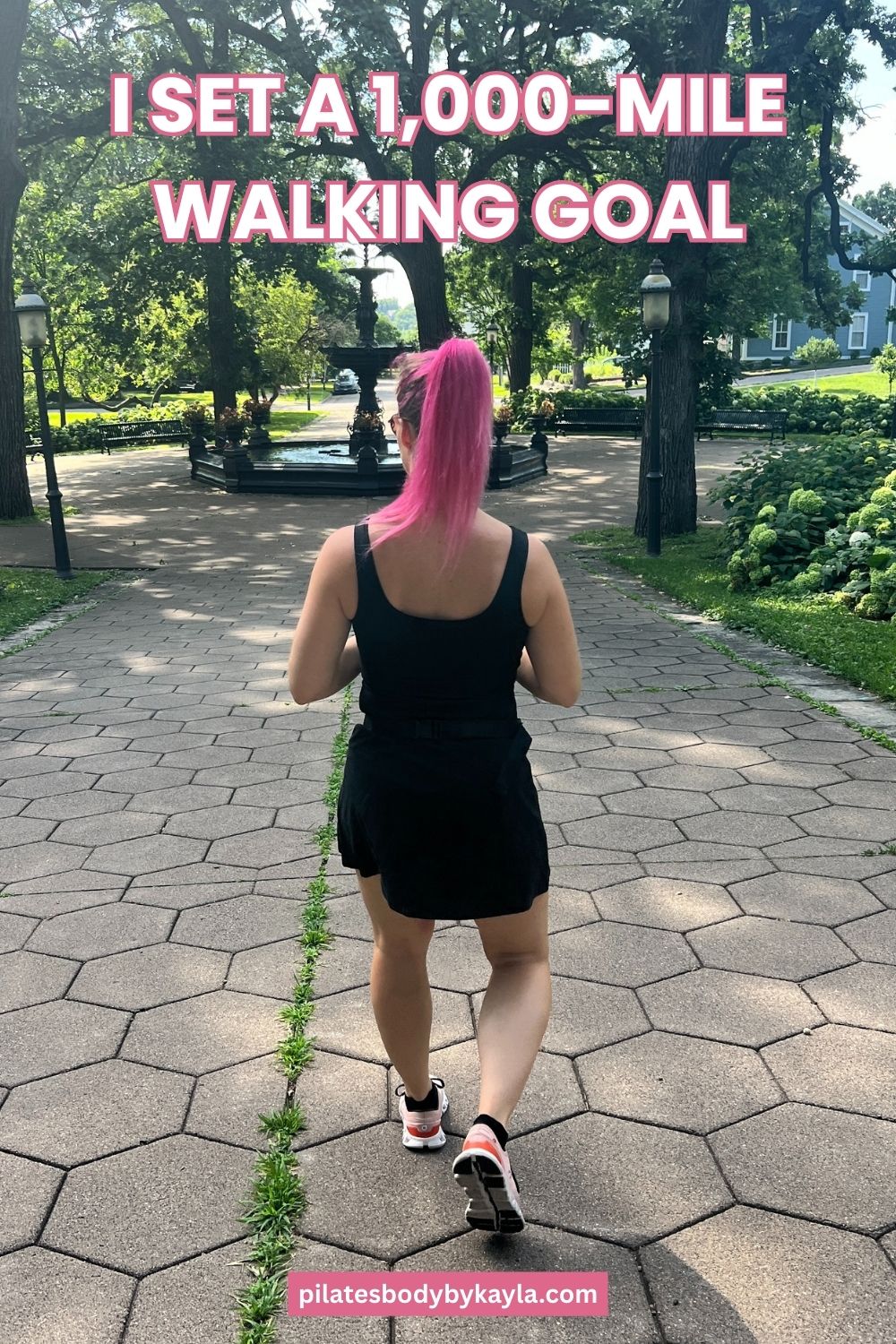
My 1,000-Mile Walking Challenge Cover.

My 1,000-Mile Walking Challenge: Lessons From a Simple Daily Habit Over a Year

I was already walking a lot before 2025.

Daily walks with my two dogs. Getting outside for fresh air. Soaking up vitamin D. Enjoying a little silence before the day got loud. Walking was already part of my life—I just wasn’t tracking it. No step count. No mileage. No specific goal tied to it.

Then I watched a friend commit to walking 1,000 miles in a year.

Something about that number stuck with me. Not because it sounded extreme, but because it sounded clear. Simple. Measurable. In a world where fitness goals feel overly complicated, this felt refreshingly straightforward.

I knew it would still be a challenge.

I have two kids. I run a full-time business. I already get my regular workouts in. Adding a walking challenge meant being intentional with my time—not pretending I had extra hours in the day.

But that’s exactly why I was in.

Walking 1,000 miles didn’t feel like a flashy resolution. It felt like a commitment I could actually keep. One that supported my body, my mental health, and my daily rhythm—instead of competing with it.

So I decided to track every mile in 2025.
No perfection. Just consistency.

Ultimately, that one simple decision ended up changing more than I expected.

This post includes affiliate links. I do earn a commission for products purchased using these links (at no additional cost to you). Thank you for supporting PILATESBODY by Kayla, making the content you see on this blog possible.

How I Broke 1,000 Miles into a Doable Daily Goal

At first, 1,000 miles sounded intimidating.

But once I did the math, it immediately felt manageable.

Walking 1,000 miles in a year averages out to 2.74 miles per day. That was my target. I was already walking over two miles most days—I just wasn’t being intentional or consistent about it.

What mattered most, though, wasn’t walking the exact same distance every day.
It was understanding how the average worked.

Some days I walked everything at once. Other days I broke it up. If I missed a day, I didn’t panic—I simply walked more the next day.

On busier weekdays, I’d sometimes split walks into shorter chunks. One mile takes about 20 minutes, so three short walks spread throughout the day put me right around three miles.

On weekends, however, it looked completely different.

That’s when I had more time. My kids were napping. Those were often my longer walks—four or five miles at once—which helped balance out shorter days during the week.

Once I stopped treating the goal like a daily rule and instead started treating it like a weekly rhythm, it became much easier to stick with.

Flexibility is what made walking 1,000 miles possible.

1000 Mile Walking Challenge Pinterest Pin.

How I Tracked Every Single Mile

I tracked every mile in Google Sheets.

Every time I went for a walk, I started a walking workout on my Apple Watch. After the walk, I logged the mileage manually.

There were days my watch died mid-walk or I forgot to start it. Instead of guessing, I walked the same route again another day to get accurate mileage.

That’s also why I didn’t rely solely on Apple Watch yearly statistics. I wanted control over the data and to see my miles add up in real time.

If you don’t want to manually track like I did, you can also go into the Activity app on your Apple Watch and calculate your walking miles by month. It’s quick and gives you a clear picture of your patterns.

Tracking didn’t make walking harder. Instead, it made it meaningful.

Physical Changes I Noticed From Walking 1,000 Miles

Walking is honestly one of the easiest things you can do to support weight loss.

There’s a reason people who live in walkable cities tend to maintain a healthier weight. When walking is built into daily life, calorie burn happens naturally—without added stress on the body.

That’s exactly what I noticed over time.

Walking increased my daily calorie burn without wrecking my recovery. It supported my Pilates and strength workouts instead of competing with them. Less stiffness. Better endurance. More energy.

According to Harvard Health Publishing, regular walking supports calorie burn, cardiovascular health, and long-term weight maintenance—especially when done consistently.

Ultimately, walking works because it’s low impact, sustainable, and easy to repeat.

Adding a Weighted Vest (and Why I Wish I Did It Sooner)

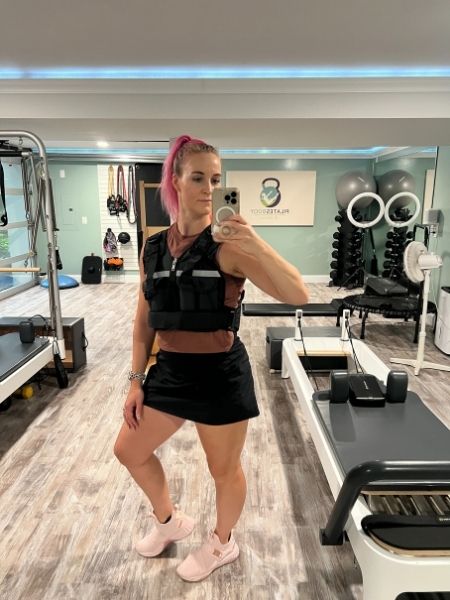
About six months into my journey, I added a weighted vest—and immediately regretted not doing it sooner. Some days walking was my only workout and on these days specifically, I made sure to wear the weighted vest.

A weighted vest increases calorie burn by adding load without changing your movement. Same walk. Same pace. More effort.

It also:

  • Slightly increases heart rate
  • Builds lower-body and core strength
  • Improves posture and bone density
  • Makes shorter walks more effective

I highly recommend an adjustable weighted vest so you can change the weight as your body adapts. Starting lighter matters.

Pilatesbody by Kayla wearing a weighted vest in her Pilates studio.
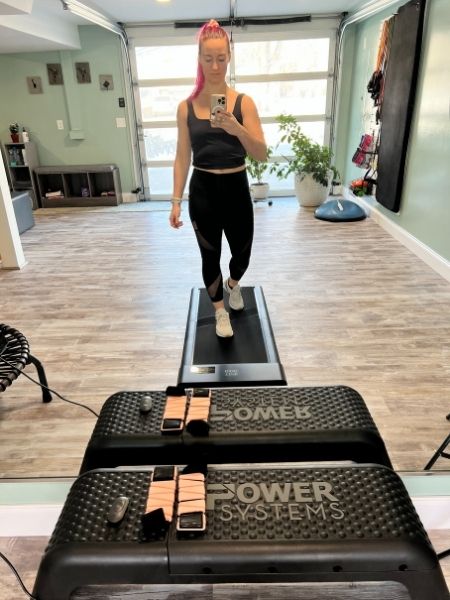
Pilatesbody by Kayla walking on a walking pad in her Pilates home studio.

How My Walking Pad Made 1,000 Miles Possible Year-Round

There’s no way I would’ve hit 1,000 miles without my folding walking pad.

Not every mile happened outside. Rainy days. Humid summer days. Freezing winter weather. Instead of skipping walks, I walked indoors.

I’d set my walking pad up in the living room, prop my iPad nearby, and walk while watching shows, responding to comments, or planning content.

It also fit seamlessly into work days.

I used my walking pad:

  • During meetings where I didn’t need to be on camera
  • While answering emails or DMs
  • During supervised play when my kids needed me nearby
  • When watching my favorite shows after the kids went to bed

This is where walking pads beat traditional treadmills.

They’re quieter, more compact, and don’t require a dedicated gym space. Mine folds up and stores easily, which meant I actually used it.

When it comes down to it, convenience drives consistency.

The Mental Benefits of Walking No One Talks About

Interestingly, some of my best ideas didn’t come from my desk.

They came on walks.

Walking gave my brain space. Some days I walked in silence. Other days I listened to podcasts or audiobooks—and because of walking, I finished over 40 books this year.

Walking made learning effortless.

Even with audio playing, I still noticed the sunshine, fresh-cut grass, and quiet walking paths. On days I needed it, I left the audio off and just checked in with myself.

Walking supported my mental health in a way I didn’t expect. Better focus. More creativity. A calmer baseline.

It didn’t just move my body.
It cleared my mind.

What My Walking Challenge Taught Me—and Why It Stuck

This walking challenge taught me that consistency doesn’t have to be intense to be effective.

It fit my life. No pressure. No performance. Some days short. Some days long. All of it counted.

Walking rebuilt trust with myself. It helped me show up as a better mom. I was more calm and present and started to appreciate the simpler things in life. Every mile logged was proof I could follow through without burning out.

That’s why it stuck.

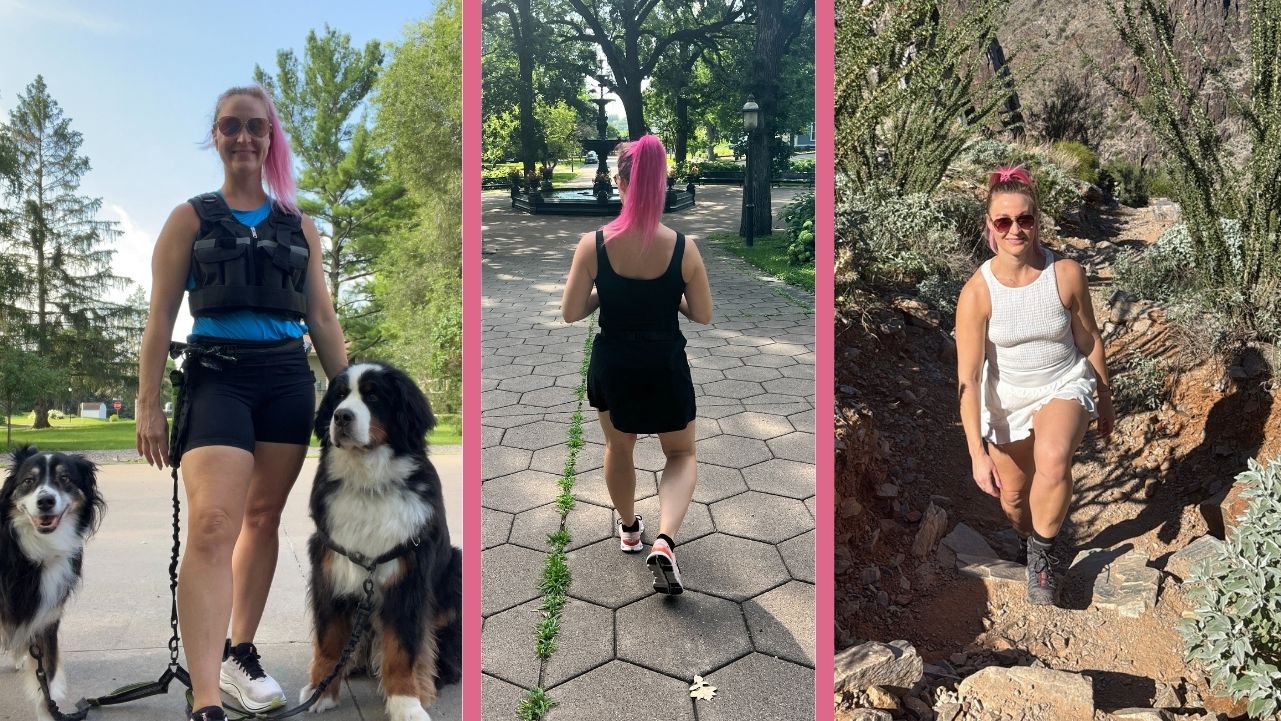
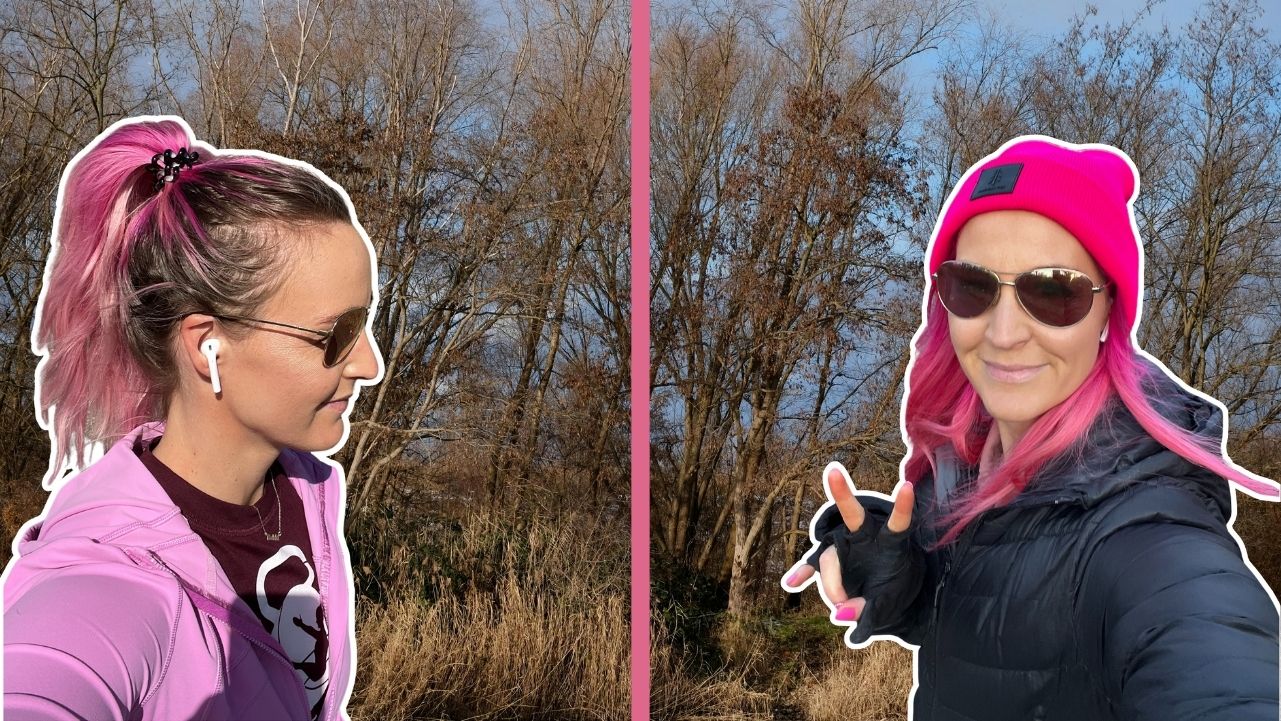
Three images of Pilatesbody by Kayla doing her walking challenge outside, with her dogs, and on vacation.

How You Can Start Your Own Walking Challenge

You don’t need to walk 1,000 miles.

You need a goal that fits your life right now—not your most motivated week.

1. Pick a number based on averages, not perfection

Instead of a strict daily rule, choose a goal you can average over time.

Examples:

  • 10–15 miles per week
  • 50–75 miles per month
  • 500 miles in a year

This gives you flexibility. Missed days don’t ruin the plan—they just get balanced out later.

2. Decide what “counts” ahead of time

Be clear from the start.

Are you counting:

  • Only intentional walks?
  • Outdoor walks only?
  • Walking pad miles too?

There’s no right answer. The only rule is consistency with your own definition.

3. Choose how you’ll track it

Tracking is what turns a good idea into a finished goal.

You can:

  • Log walks in the Apple Watch Activity app
  • Keep a simple Notes list
  • Use a basic Google Sheet like I did

Seeing progress builds momentum.

4. Make walking fit your day

Don’t add walking on top of your life—layer it into what you already do.

Walk:

  • While listening to podcasts or audiobooks
  • During meetings where you’re off camera
  • While your kids play nearby
  • On a walking pad when weather isn’t cooperating

Walking works because it’s adaptable.

5. Let effort change day to day

Some days will be short and easy.
Other days can be longer, hillier, or weighted.

Both matter.

That flexibility is why walking is sustainable.

6. Start before you feel ready

You don’t need new shoes, a perfect plan, or motivation.

You just need to walk.

Start small. Track it. Adjust as you go.

That’s how walking turns from something you should do into something you actually stick with.

Walking Challenge FAQ

Did you track your total miles walked for the entire day?

No. I only tracked intentional walking miles where I started a walking workout on my Apple Watch.

Did walking replace your regular workouts?

Most of the time, no. Walking supported my Pilates and strength workouts. On busier days, I planned longer walks with a weighted vest and hills and treated that as my workout.

Do you have to walk outside for a walking goal to count?

No. I prioritized outdoor walks for mental health benefits, but used my walking pad on days I couldn’t control the weather.

Pilatesbody by Kayla working on her 1,000 mile walking challenge by taking walks outside.

Must-Have Items for a Walking Challenge

Weighted Vest

Black Sportneer adjustable weighted vests for women.

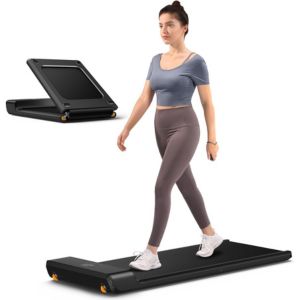
Folding Walking Pad

The best foldable walking pad and Pilatesbody by Kayla's top choice.

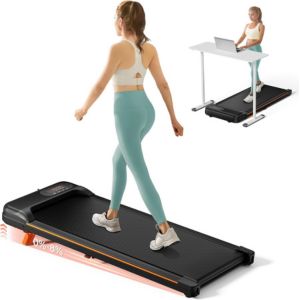
Incline Walking Pad

The best lightweight walking pad on Amazon.

Apple Airpods

Apple Airpods Pro 2.

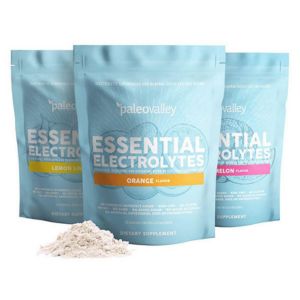
Electrolytes

Three light blue bags of Paleovalley Essential Electrolytes with a small pile of electrolyte powder in the foreground.

Hoka Sneakers

The best walking shoes on Amazon: Hoka Gaviota 5.

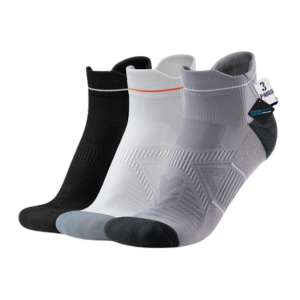
Compression Socks

Set of three compression ankle socks, black, white, and gray.

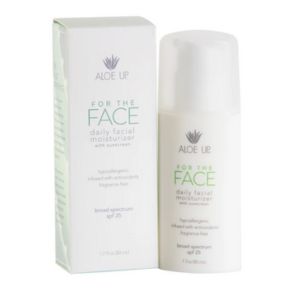
Sunscreen

Use code KAYLAB

Aloe Up Daily Moisturizer SPF 25.

Final Thoughts on My 1,000 Mile Walking Challenge

Walking 1,000 miles didn’t change my life overnight.

It changed it slowly—one walk at a time.

Small habits add up. And when something supports your life instead of complicating it, consistency follows.

Want an easy place to start?

If you’re thinking, “Okay… but I just need someone to tell me exactly what to do,” I’ve got you.

I have 10– and 20-minute walking pad workouts on YouTube that are perfect for busy days, meetings-off-camera days, or when the weather isn’t cooperating. Set up your walking pad, press play, and let me guide you.

Short. Simple. No overthinking.

Perfect if you want consistency without turning walking into another big production.

Your Friend & Pilates Expert,

signature-01

Kayla Brugger
Founder of PILATESBODY by Kayla
Founder of PILATESBODY On-Demand

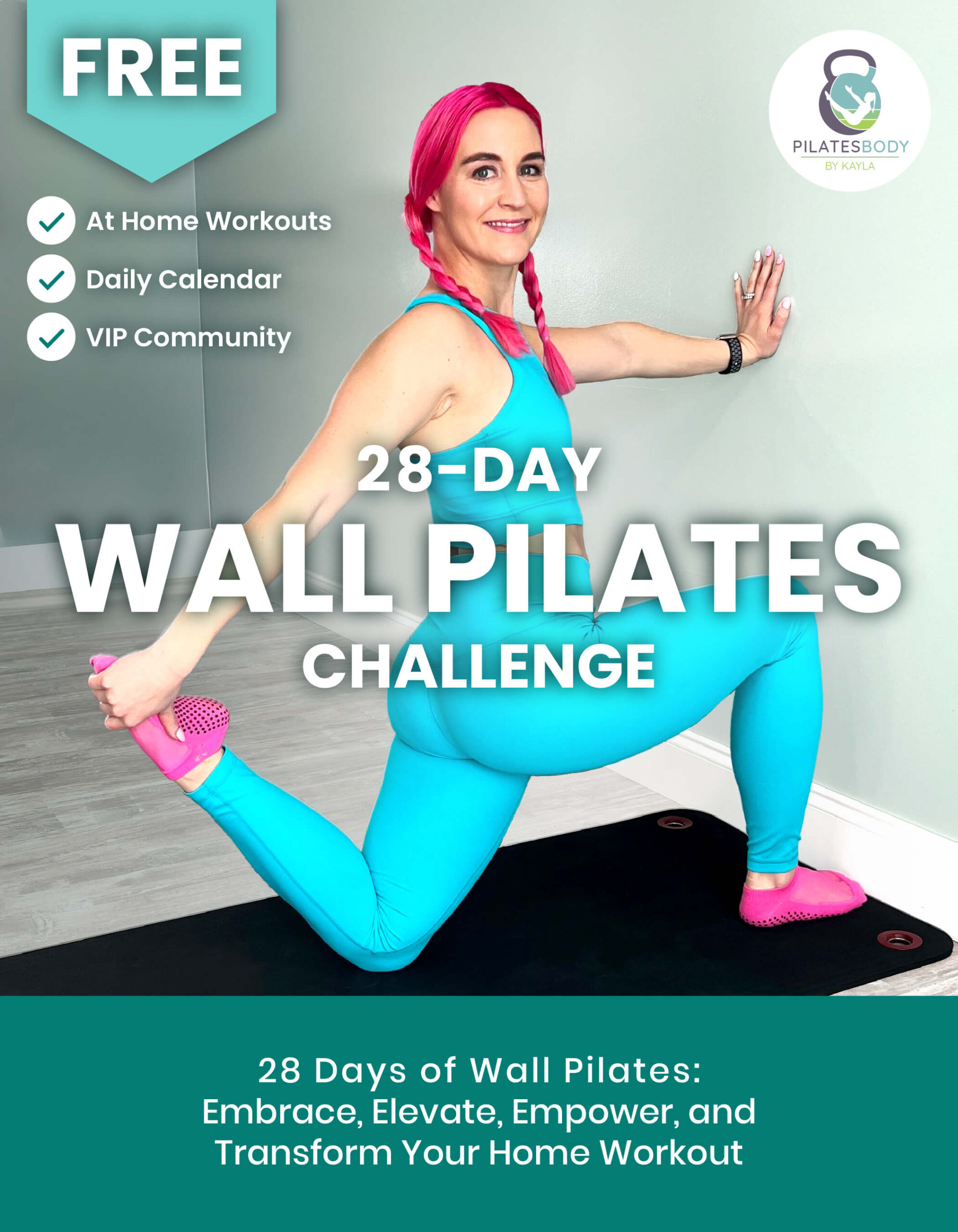
Free 28-Day Wall Pilates Challenge

28 Days to transform your habits with this beginner, full body Wall Pilates program. Reshape your mind-body connection in just 15 minutes a day. Download your Free Pilates Workout Calendar PDF to get started today!

Free 28-Day Wall Pilates Challenge on YouTube - Transform Your At Home Pilates Workouts - PILATESBODY by Kayla

Free 28-Day Wall Pilates Challenge

28 Days to transform your habits with this beginner, full body Wall Pilates program. Reshape your mind-body connection in just 15 minutes a day. Download your Free Pilates Workout Calendar PDF to get started today!