You have 0 items in your cart
Not all Pilates instructors are trained the same—and that matters for your body. This guide breaks down Pilates certification, Pilates instructor training, and how to choose a qualified Pilates instructor you can trust.

Pilates is having a moment.
And while I love seeing more people discover it, there’s a growing issue that needs to be talked about.
More instructors are teaching “Pilates” without being trained through accredited Pilates certification programs. Why that matters is a deeper conversation—and honestly, a whole separate blog.
For now, let’s focus on how to spot the difference between a properly trained Pilates instructor and someone simply using the label.
Pilates isn’t just slow movement in matching sets.
It’s a methodical system designed to build strength, improve posture, protect the spine, and create long-term body awareness.
Let’s dive into that a little deeper. When I say Pilates is a method, here’s what that actually means—without the jargon:
Without these principles, Pilates turns into a disconnected workout instead of a system that builds real strength and resilience.
This is the first and most important filter.
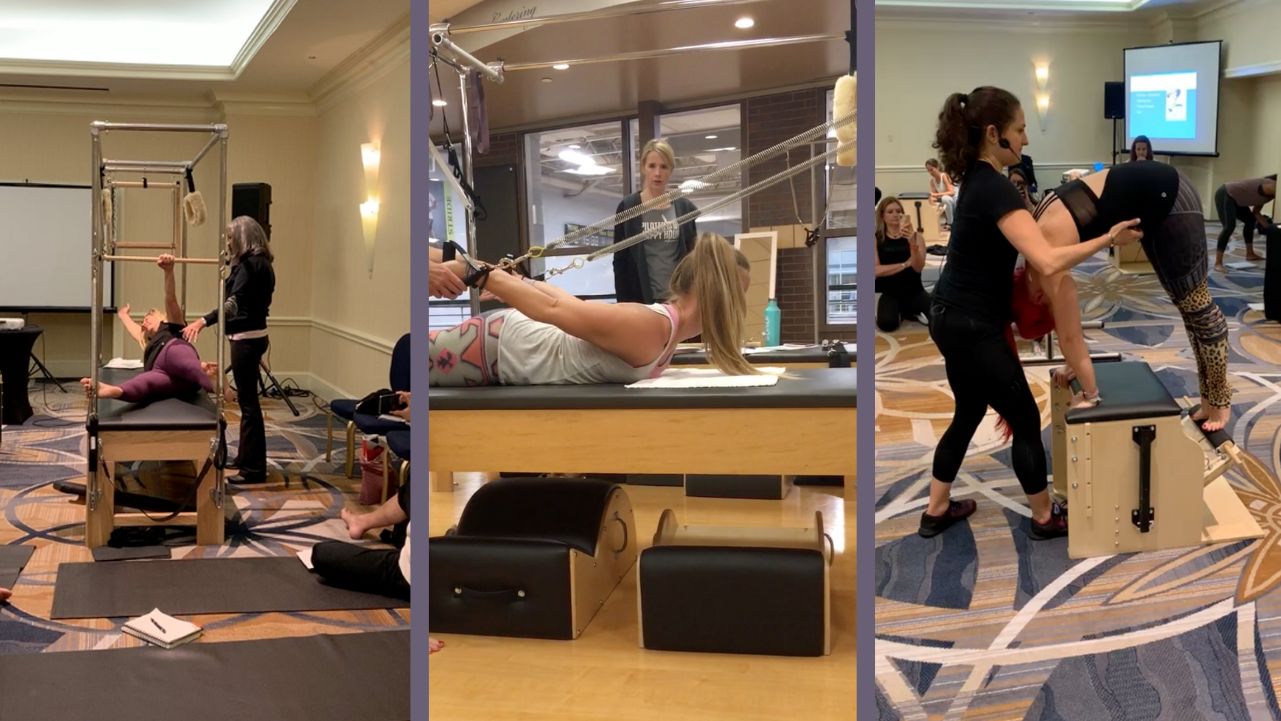
Reputable Pilates instructors complete hundreds of hours of education that includes anatomy, observation, practice teaching, and testing.
Well-known, accredited programs include:
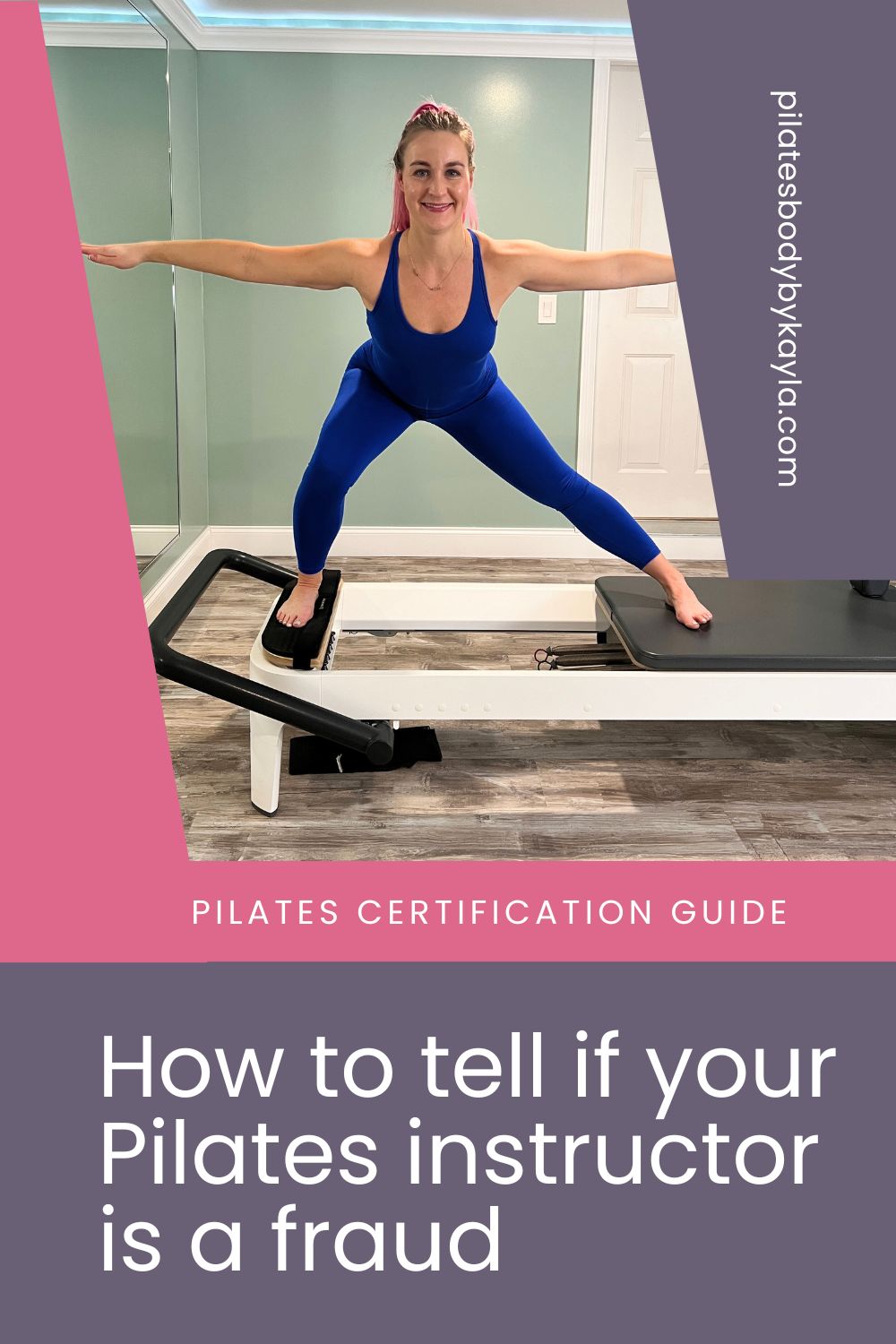
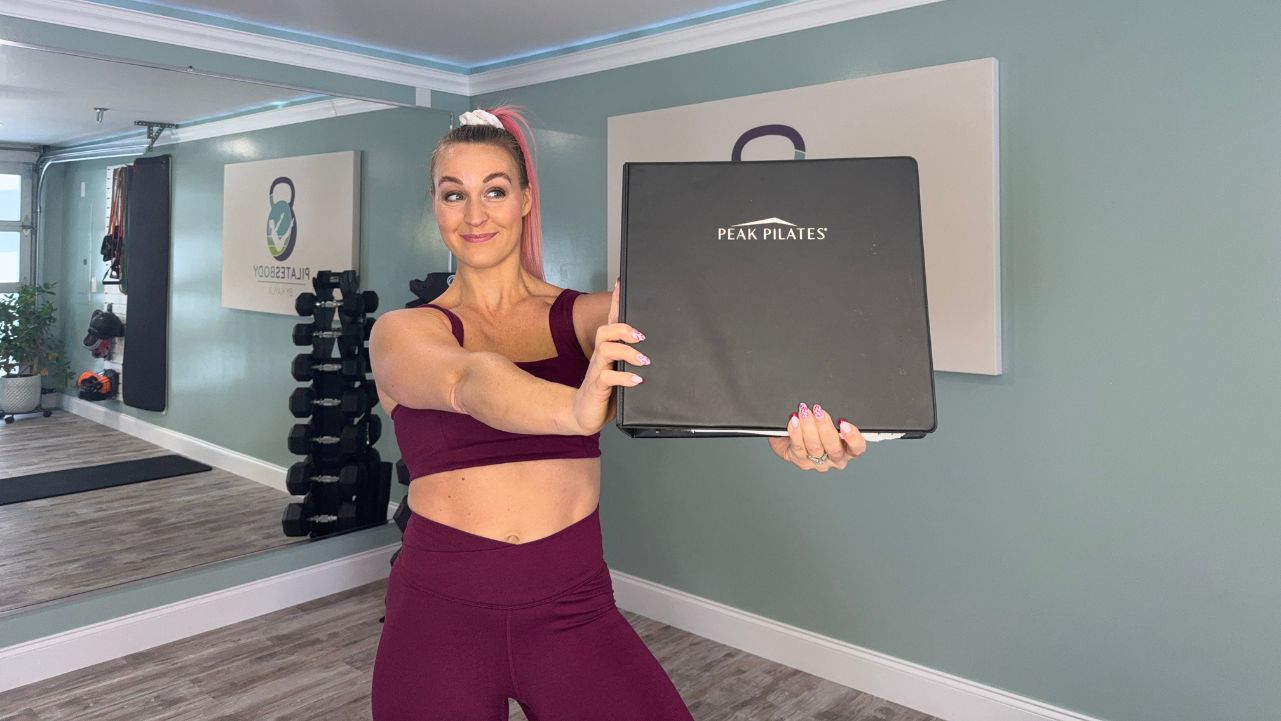
I am fully comprehensively certified through Peak Pilates.
Peak is rooted in classical Pilates and includes:
Classical Pilates is both a strength and a limitation.
It teaches discipline, structure, and respect for the method—but it can also be strict and rigid, sometimes presenting Pilates as the only way.
That’s where my approach differs.
I’ve blended classical Pilates with contemporary Pilates principles and my background as a certified personal trainer. This allows me to respect the method while adapting it intelligently for modern bodies, real life, and long-term results.
This part causes the most confusion.
Studios like Lagree-style classes, Solidcore-style formats, and large Pilates franchises teach branded fitness systems. Franchises typically focus on numbers and how many people they can get in a class and push through their doors each day. These are strength-based, group fitness, Pilates-inspired workouts.
They train instructors to:
They do not train instructors in:
These workouts aren’t “bad.”
You may even love them. They can be fun, motivating, and effective in their own way.
But they are not true classical Pilates certifications. They are watered-down versions of the method.
If an instructor lists only franchise training, it’s fair to ask whether they hold other legitimate fitness certifications. Believe it or not, many fraudulent instructors skip foundational education entirely. So do your research!
Exercise names tell you how a movement should be done—not just what it looks like.
Those movements aren’t wrong.
They’re just not Pilates.
Pilates names exist because each exercise has a specific intention, muscle focus, and place within the sequence. When everything is renamed using gym terms, it usually means the instructor never learned the method.
A trained Pilates instructor doesn’t rely on sensation alone.
Fraud instructors often rely on speed or repetition to make you feel something.
Pilates instructors go deeper.
Pilates uses imagery cueing to help you access the correct muscles with precision.
Here are some examples:
Imagery cueing reflects real anatomical understanding.
Generic cues usually signal missing education.
Pilates is designed to flow.
Flow isn’t just about looking graceful.
It’s also functional.
A trained instructor:
Flow teaches coordination, efficiency, and control. The movement between exercises becomes part of the work, making every moment purposeful.
When sequencing is random, the method disappears—and as a result, so do the benefits.
Poorly taught Pilates doesn’t just limit results.
It can create problems.
When instruction lacks proper training, you miss out on:
Pilates done correctly should leave you feeling stronger, taller, and more connected—not strained or confused.
Before paying for a class or program, ask these questions about their Pilates instructor training:
Next, observe the following:
You’re allowed to ask questions.
Your body deserves educated instruction.
Legitimate certifications teach every exercise individually. Instructors observe veteran teachers, practice on many different bodies, and pass rigorous exams. This depth is what keeps your body safe and produces real results.
It depends on the program and level, but most reputable certifications require 300+ hours per level. These hours include in-person training, observation, practice teaching, and testing.
Yes. Pilates must be learned in person so instructors can develop hands-on cueing, corrections, and body awareness. Online-only programs are not sufficient.
Absolutely. Pilates started on the mat—the equipment came later. Learning the method through mat work first is actually a strong foundation.
Yes. A mat-certified instructor who understands the method, sequencing, and cueing can be highly skilled. Starting with mat certification is often a green flag.
No. Franchises teach branded workouts, not the Pilates method. You may get a fun, motivating class, but these are not true classical Pilates certifications.
Yes. Many instructors excel at general fitness. Pilates is a specialized method that requires its own education to teach safely and effectively.

Pilates done well is incredibly powerful.
But Pilates done poorly is just another workout wearing the name.
Instructor education matters because your body deserves more than guesswork. A trained Pilates instructor understands the method, respects the system, and knows how to adapt it safely to real bodies—not just make you sweat.
You don’t need perfection.
You don’t need fancy equipment.
But you do need someone who actually knows what they’re teaching.
And once you know what to look for, you’ll never see Pilates the same way again.
Your Friend & Pilates Expert,
Kayla Brugger
Founder of PILATESBODY by Kayla
Founder of PILATESBODY On-Demand