You have 0 items in your cart
Discover some aquatic fitness trends and low-impact workouts that build strength, boost energy, and fit into busy mom life—without the burnout.

Most at-home workout routines start the same way.
You roll out a yoga mat in the living room…
Promise yourself you’ll use it every day…
And then a week later it’s buried under laundry.
If that sounds familiar, you’re not alone.
For many women—especially busy moms—the environment you work out in can make or break your consistency.
As a Pilates instructor who has trained clients virtually for years, I’ve seen firsthand that the women who stay consistent usually have one thing in common: a simple, dedicated Pilates space in their home.
Many of my clients start with nothing more than a mat in their living room and one simple routine. If you’re looking for a place to begin, you might enjoy these Pilates At Home Workouts for Busy Moms. They help to build strength even when life—and kids—are happening around you.
Here are nine strategies to help you create a Pilates space that supports your strength, focus, and routine.
(Even if all you have is a small corner of your living room.)
This post includes affiliate links. I do earn a commission for products purchased using these links (at no additional cost to you). Thank you for supporting PILATESBODY by Kayla, making the content you see on this blog possible.

Pilates requires concentration.
Joseph Pilates often referred to his method as “Contrology” because of the emphasis on controlled, intentional movement.
A calm space helps you stay connected to your breath, alignment, and muscle engagement during workouts.
Your Pilates space could be any of these:
The goal isn’t perfection.
The goal is creating a place where your brain associates the environment with movement and focus.
Research shows that environmental cues can reinforce habits and improve exercise adherence over time, helping make workouts feel more automatic rather than something you have to force yourself to do (Gardner, 2015).
If your workout space is noisy or chaotic, consider using noise-canceling headphones or adding more insulation to an existing wall.
Even small changes can make workouts feel more intentional.
One of the biggest advantages of Pilates is that you don’t need a huge space to train effectively.
However, you do need enough room to move freely.
Before committing to a location, try this quick test: Stand in the space and extend your arms in all directions.
You should be able to:
rotate without hitting furniture
Many Pilates exercises involve large controlled ranges of motion, especially in movements like leg circles, roll-ups, side kicks, and lunges.
If you eventually want to incorporate equipment—like sliders, dumbbells, resistance bands, or even a Pilates reformer machine—planning for a little extra space now can save you from rearranging the entire room later. If you’re short on space or a reformer isn’t in the budget, check out my 3-Week Reformer Pilates At Home Challenge. I designed it to recreate reformer-inspired movements using simple equipment at home.
Even a small amount of extra space can make your workouts feel smoother and more comfortable.

Flooring can dramatically change how your body feels during Pilates.
Hard, unstable surfaces can make exercises uncomfortable, while overly soft surfaces reduce stability.
Many home gyms work well with the following types of flooring:
Pairing these surfaces with a high-quality Pilates mat provides cushioning for kneeling and laying movements.
Proper support can reduce joint strain and improve exercise comfort, which may increase consistency and adherence to a workout routine (American Council on Exercise, 2026).
You can also consider adding the following items to your Pilates space:
These will protect both your body and your floors.
Nothing kills workout motivation faster than a messy space.
If you have to move toys, laundry, and furniture every time you want to exercise, you’re less likely to start.
A few simple storage solutions make a big difference:
When your gear is organized and easy to grab, starting a workout feels effortless.

Lighting affects mood more than most people realize.
Natural light can make a workout space feel energizing and motivating.
If possible, position your Pilates mat near a window.
Studies have shown exposure to natural light can improve mood and overall well-being (Harvard Health, 2023).
If your workout area lacks natural light, consider adding one of more of these:
Good lighting also helps you see your alignment during exercises, which is essential in Pilates.
Mirrors are a staple in most Pilates studios for a reason.
They provide instant visual feedback on posture and alignment.
This is especially helpful for movements like:
Even a single full-length mirror can help you notice if your hips, ribs, or shoulders are out of alignment.
Better alignment reduces injury risk and improves muscle activation during training.

Your Pilates space should feel inviting.
Not clinical.
Small personal touches can make the environment more enjoyable:
Indoor plants, in particular, have been shown to reduce stress and improve mental well-being (Bringslimark, Hartig, & Patil, 2009).
When your Pilates space reflects your personality, you’ll actually want to spend time there!
Many women work out at home because their schedules are unpredictable.
Kids need snacks. Emails pop up. Life happens.
Instead of waiting for a perfect uninterrupted hour, design a space that supports quick workouts.
For example:
Short workouts can still produce meaningful results when done consistently. Even a quick session—like this 10-Minute Standing Ab Workout with Weights—can help you stay on track when time is tight.
The easier it is to roll out your mat and start moving, the more likely you are to stay consistent during busy seasons of life.

Walls are incredibly useful for Pilates workouts.
They can support:
Wall support helps reinforce proper posture and core engagement while also giving beginners extra stability during movements.
In fact, many effective at-home routines use the wall as a training tool. For example, my Wall Pilates X Strength Workout uses the wall to help activate the deep core, improve alignment, and add extra challenge to traditional Pilates movements.
Not at all. One of the biggest advantages of Pilates is that it requires very little space. If you can lie down comfortably, extend your arms overhead, and move your legs without hitting furniture, you likely have enough room to practice. Many women start with nothing more than a mat in the living room and still see great results.
You can start with just a good Pilates mat. As you progress, small tools like resistance bands, ankle weights, sliders, and light dumbbells can add variety and challenge to your workouts. The beauty of Pilates is that it scales easily—you can keep things simple or gradually build out your home setup over time.
Yes—consistent Pilates workouts at home can absolutely build strength, improve posture, and increase flexibility. The key isn’t having fancy equipment or a large studio space. It’s practicing regularly and focusing on controlled, intentional movements that engage the core and stabilize the body.
You’re not alone—this is one of the most common situations for moms working out at home. Many women set up their mat near a play area or choose short workouts they can fit into small pockets of time. Even a quick 10–20 minute session can make a difference when done consistently.
Creating a dedicated workout space can help a lot. When your mat, equipment, and environment are ready to go, it removes the friction that makes it easy to skip a workout. Even small details—like good lighting, organized equipment, or a motivating playlist—can make your Pilates routine feel like something you look forward to instead of another task on your to-do list.

Creating a Pilates space at home doesn’t require a lot of equipment. A few thoughtfully chosen tools can make your workouts more enjoyable and help your space feel organized and motivating.
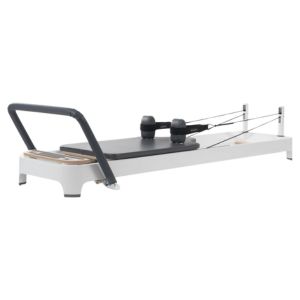
If you’re ready to take your home workouts to the next level, the Allegro 2 Pilates Reformer brings studio-quality training right into your Pilates space. It allows you to perform hundreds of reformer exercises that build strength, flexibility, and deep core control.
Lighting can completely change the feel of your Pilates space, and a warm ambient light strip creates a calm, inviting atmosphere for workouts. It’s a simple way to make your home studio feel more relaxing and motivating.

A supportive Pilates mat is one of the most important foundations of a great Pilates space. This high-quality mat provides cushioning for spinal articulation, core work, and floor exercises while still offering the stability you need for controlled movement.
A storage bench is a smart way to keep your Pilates space organized while also adding seating or décor to the room. You can easily store resistance bands, sliders, ankle weights, and other small tools inside so your workout area stays clutter-free.

A versatile dumbbell set is perfect for adding strength training into your Pilates routines. Light to moderate weights allow you to challenge your arms, glutes, and core while maintaining the slow, controlled movements Pilates is known for.
A decorative basket set helps keep your Pilates space tidy and functional. Use them to store bands, Pilates rings, ankle weights, or sliders so everything is easy to grab when it’s time to work out.

A faux plant is a simple way to add warmth and personality to your Pilates space. Even small touches like greenery can make your workout area feel more calming, welcoming, and enjoyable to spend time in.



You don’t need a reformer.
You don’t need expensive machines.
And you definitely don’t need a perfectly designed studio.
What matters most is creating a space that removes friction so movement becomes part of your routine.
A simple corner with a mat, a few pieces of equipment, and a motivating environment is often all it takes.
And when your workout space supports your habits, consistency becomes much easier.
If you’re ready to start using your new space, consider following a structured routine like Spring Into Pilates: 7-Day Mat Pilates Workout. It’ll give you a simple plan to get moving every day right at home.
Because at the end of the day, the best Pilates space is simply the one that helps you show up and move.
Your Friend & Pilates Expert,

Kayla Brugger
Founder of PILATESBODY by Kayla
Founder of PILATESBODY On-Demand