How often should beginners strength train?
When you’re new to lifting, 2–3 sessions per week is the sweet spot. That gives your muscles time to adapt, recover, and grow stronger without overdoing it. I always tell my clients—it’s not about training every day, it’s about training consistently. A good rhythm might look like:
- 2 full-body workouts each week to learn the basics
- Or 3 split-style sessions (upper, lower, and full-body) once you feel more confident
And remember—rest days aren’t “lazy” days. That’s when your body actually rebuilds and gets stronger.
What equipment do I actually need as a beginner?
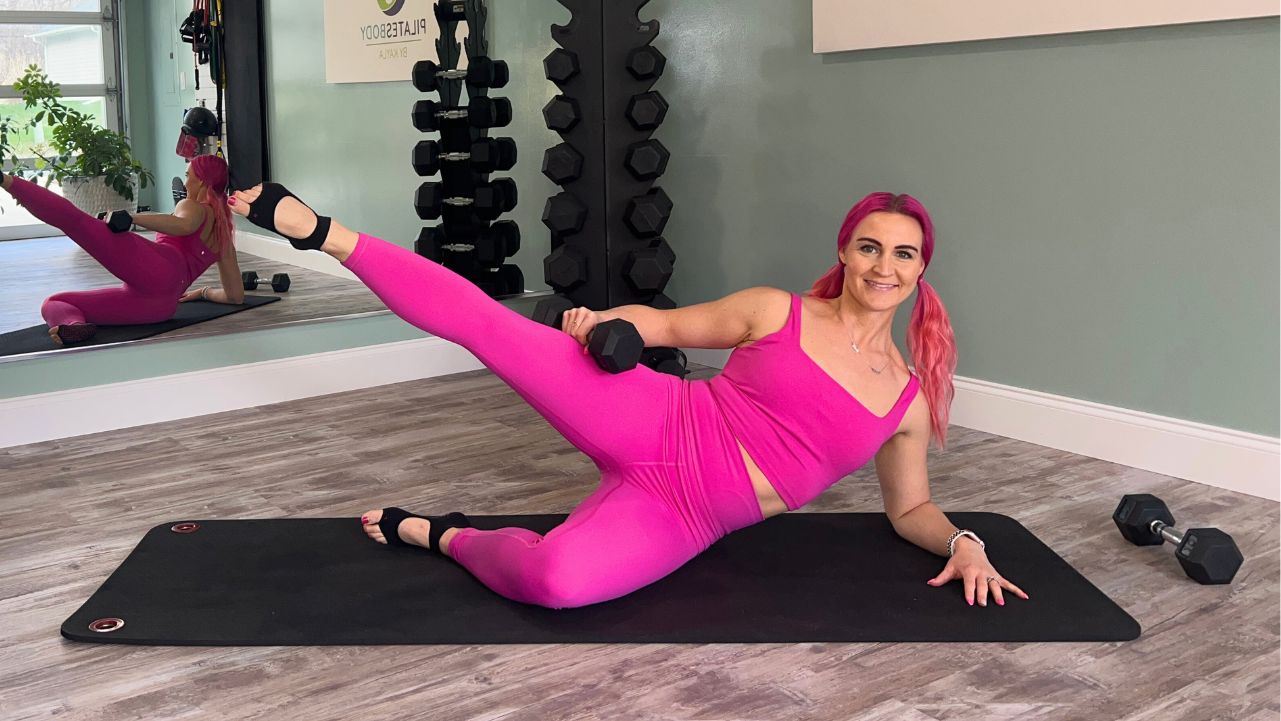
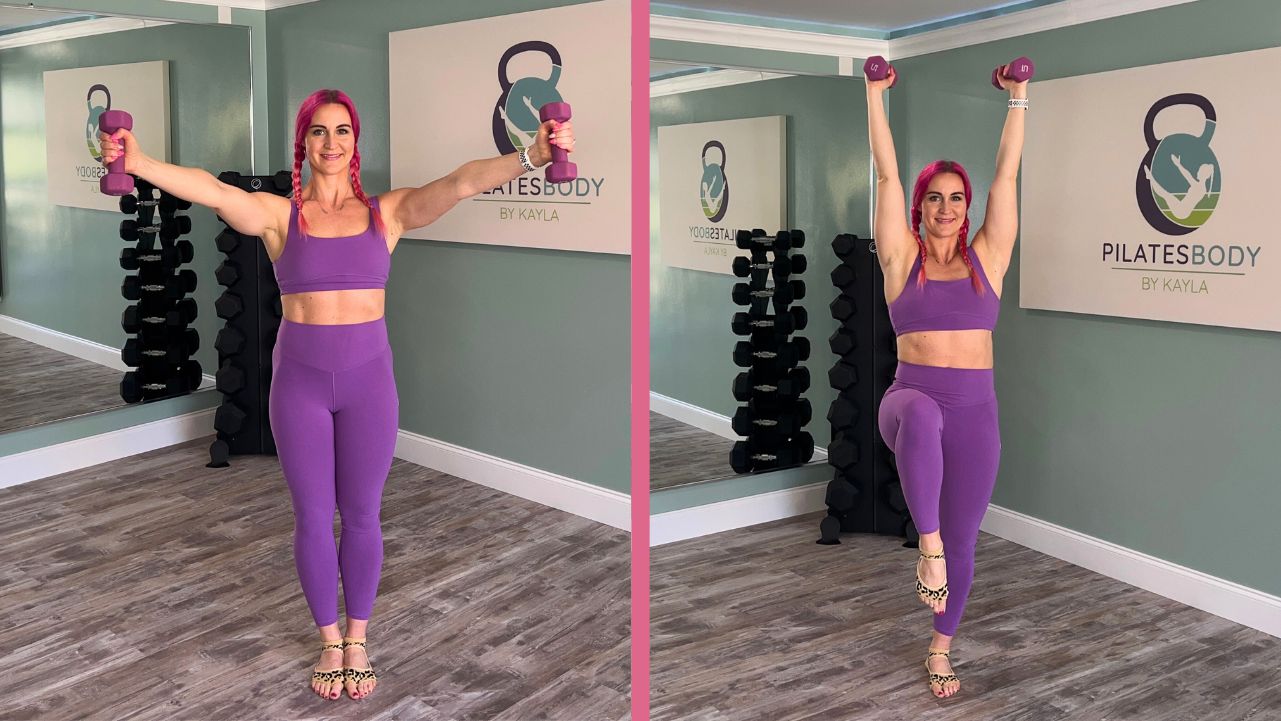
You don’t need a gym membership or a garage full of weights to get started. For most beginners, a pair of dumbbells (5–15 lbs), a resistance band, and a mat will do the trick.
You can add more equipment over time, but this simple setup covers every major muscle group—and it’s exactly what I use with many of my online clients training from home.
If you’re not ready to invest yet, start with bodyweight workouts and household items (like water bottles or a backpack filled with books). The point is to just start moving.
Can I build muscle at home without a gym?
Absolutely. Some of my strongest clients have never stepped foot in a traditional gym.
Building muscle comes down to two things: resistance and progression. You can achieve both at home with dumbbells, resistance bands, or your own bodyweight. The key is to challenge your muscles over time—add reps, slow your tempo, or increase resistance.
I love reminding my beginners that it’s less about where you train and more about how consistently you show up.
How long until I see results?
This depends on your starting point and how consistent you are, but most women begin to feel results—like better energy, strength, and confidence—in about 2–3 weeks.
Visible changes like muscle tone or body composition shifts usually show around 6–8 weeks with regular training and good nutrition.
The biggest surprise for many of my clients? They start noticing differences in their posture, how their clothes fit, and even their mood before the scale moves. That’s real progress.
Should I do cardio with strength training?
Yes, but it doesn’t have to mean hours on the treadmill. I’m a big believer in balanced movement: strength training builds muscle and definition, while low-impact cardio like walking or Pilates helps with endurance, recovery, and stress relief.
Think of it as a mix that keeps your body strong, lean, and energized. Here’s my personal favorite formula:
- 2 strength workouts
- 2 Pilates sessions
- 2 walks per week
That’s all you need to build a strong, functional, and sustainable fitness routine—even with a busy schedule.