What are the most common Pilates mistakes?
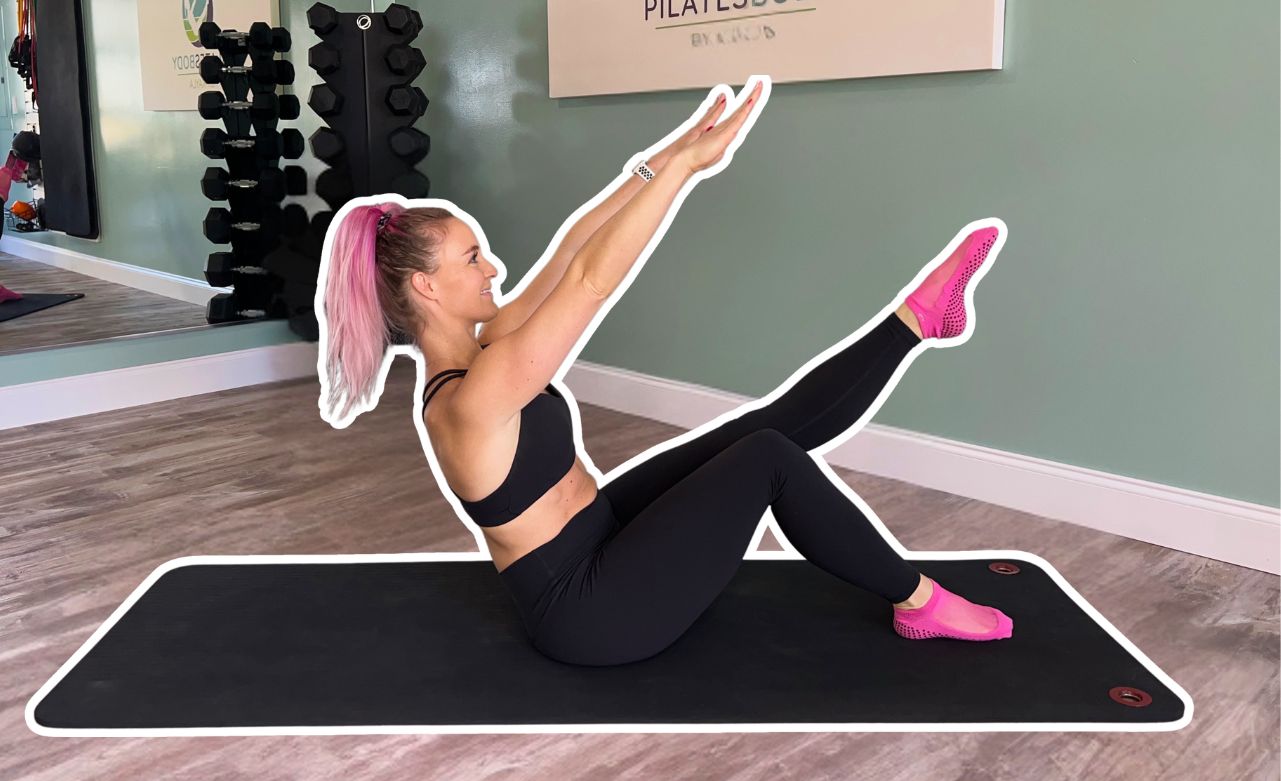
Some of the most common mistakes include rushing through exercises, holding your breath, arching your lower back, skipping your warm-up, and attempting advanced movements before mastering the basics. Slowing down and prioritizing good form will help you get better results while staying safe.
What should I do if an exercise hurts during Pilates?
You should never push through sharp pain, numbness, or dizziness. Stop the exercise, assess how you’re feeling, and modify the movement if needed. On the other hand, it’s completely normal for your muscles to feel fatigued, shaky, or challenged during Pilates, especially when you’re working your deep core or holding an exercise for longer periods. The key is learning the difference: muscle fatigue is a sign your muscles are working, while sharp or sudden pain is a signal to stop.
Do I need special equipment to do Pilates safely at home?
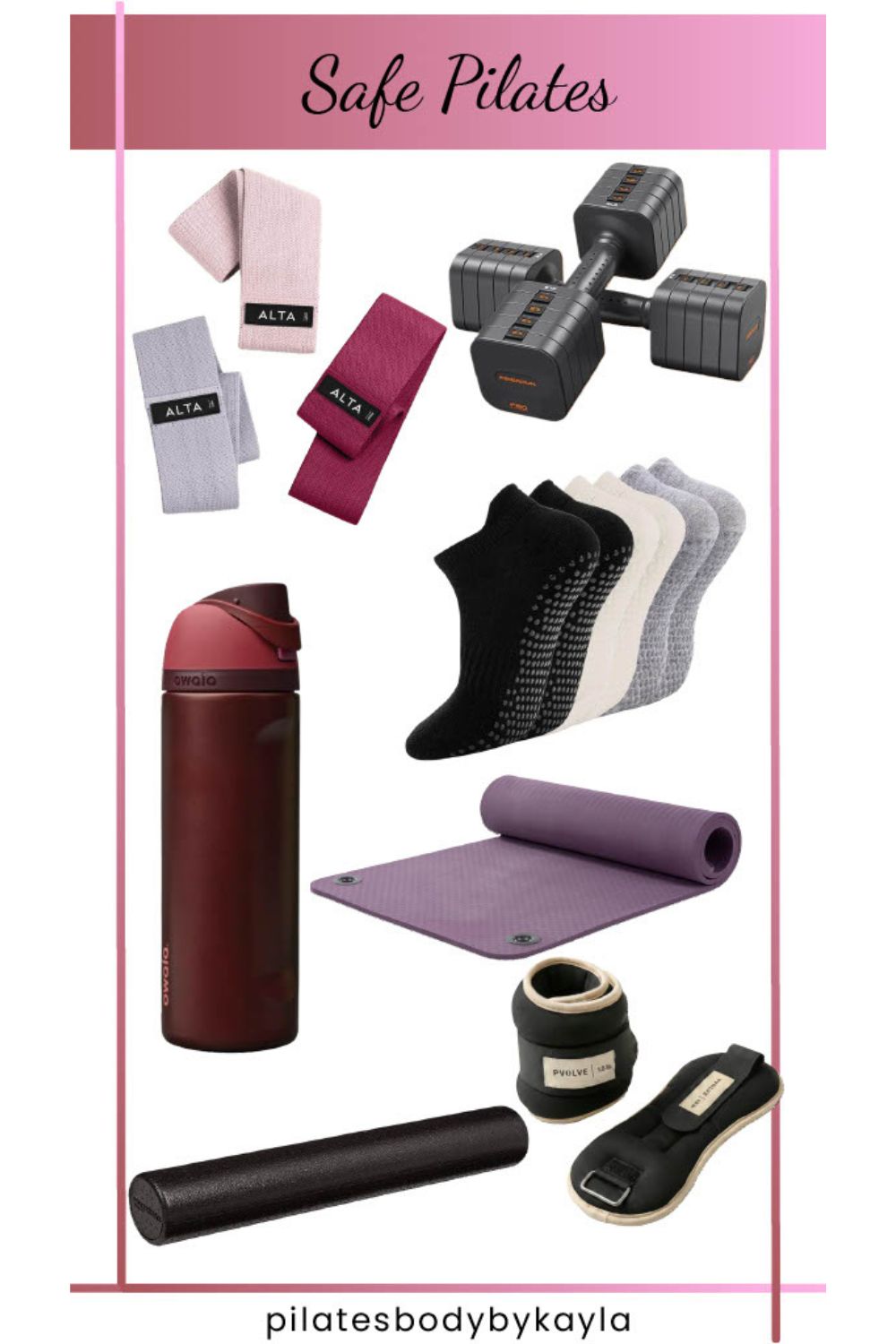
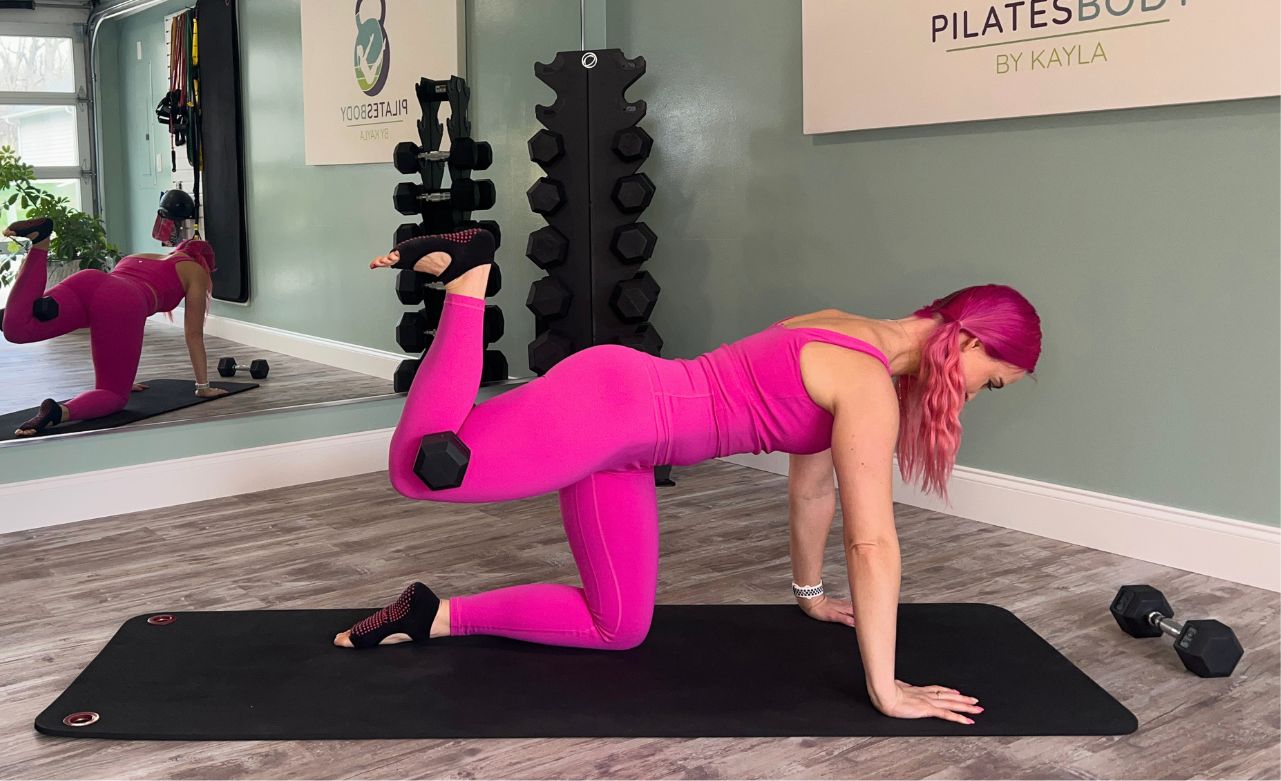
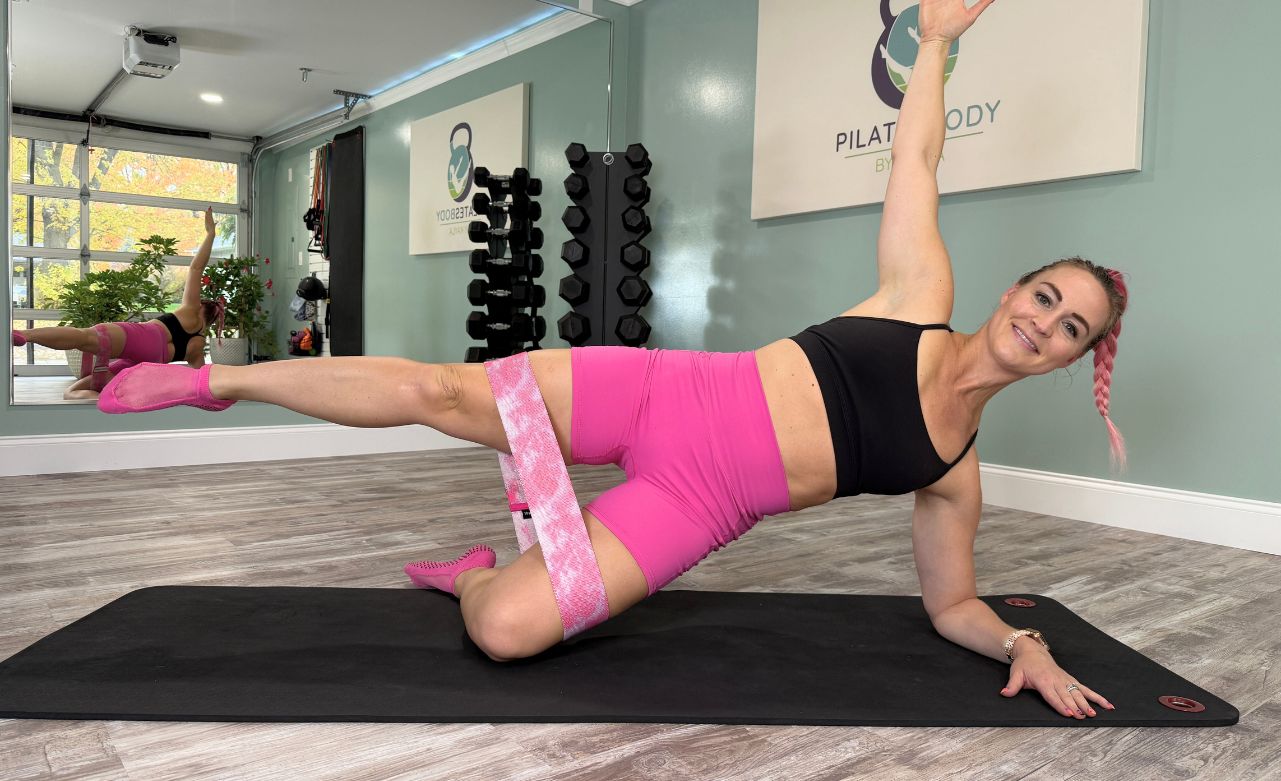
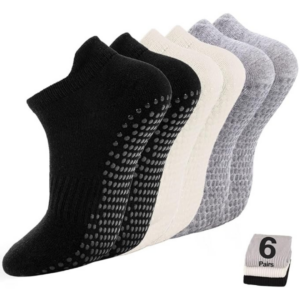
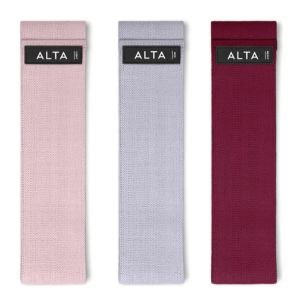
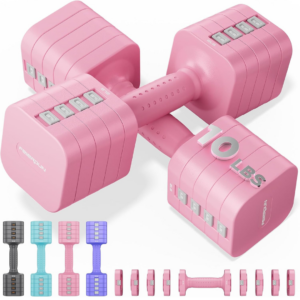
Not at all. A supportive Pilates mat and enough open floor space are all you need to get started. As you become stronger, you can gradually add equipment like resistance bands, light dumbbells, or ankle weights to increase the challenge while maintaining proper form.
Is it okay to do Pilates every day?
For most healthy adults, yes. Pilates is gentle enough to be practiced several days a week, especially when you vary the intensity of your workouts. Just remember to listen to your body, allow time for recovery when needed, and take rest days if you’re feeling overly fatigued or sore.
How can I improve my Pilates form at home?
Start with beginner-friendly workouts that explain proper alignment and breathing. Moving slowly, using a mirror or recording yourself occasionally, and choosing quality movement over more repetitions will help you build better technique and confidence over time.